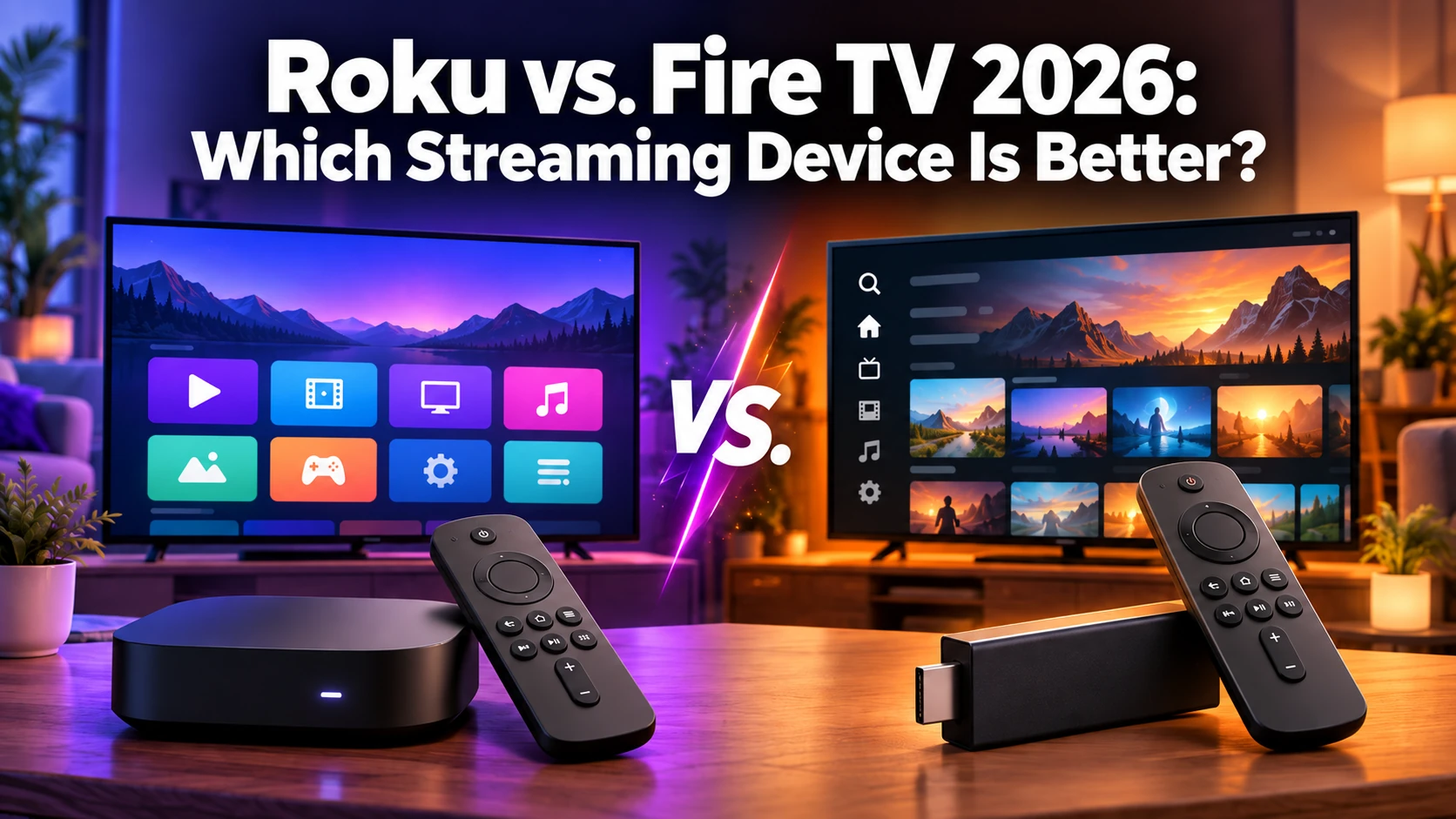
If you are shopping for a streaming device in 2026, there is a good chance your decision will eventually come down to Roku vs. Fire TV.
Both platforms give you access to the major streaming services, live TV apps, free streaming channels, and 4K entertainment. Both also offer everything from inexpensive streaming sticks to more powerful premium devices.
But the experience of actually using them can be very different.
I have been using Roku devices for years. My first was a Roku Premiere, and since then I have owned two or three Roku Ultras along with a Roku Streaming Stick. One of the biggest reasons I have stayed with Roku is simple: it has always felt almost plug and play to me. Setup is easy, navigation is straightforward, and I can get to the streaming services I want without much fuss.
I don’t have that same hands-on experience with Amazon Fire TV, so I won’t pretend that I do. My Fire TV comparisons in this article are based on current features, specifications, and research.
That doesn’t mean Roku automatically wins.
Fire TV has some real strengths of its own, especially for people who already use Alexa, Amazon services, and smart-home devices.
So which streaming platform is better in 2026?
Let’s compare Roku and Fire TV side by side and find out which one makes the most sense for the way you watch TV.
Roku vs. Fire TV at a Glance
Before getting into the details, here is a quick look at how Roku and Fire TV compare in the areas that matter most.
| Category | Roku | Fire TV |
|---|---|---|
| Ease of use | Excellent | Very Good |
| Simple interface | Winner | More content-focused |
| App availability | Excellent | Excellent |
| Voice control | Good | Winner |
| Alexa integration | Compatible | Excellent |
| Smart-home features | Good | Winner |
| Free streaming content | Excellent | Excellent |
| 4K/HDR options | Excellent | Excellent |
| Premium device | Roku Ultra | Fire TV Cube |
| Private listening | Excellent | Very Good |
| Gaming | Limited | Winner |
| Best for beginners | Roku | Good |
| Best for Alexa households | Good | Fire TV |
| Overall simplicity | Roku | Good |
The biggest difference is really the way the two platforms approach streaming.
Roku puts simplicity first. It is designed to make it easy to find your apps, choose what you want to watch, and get started.
Fire TV puts more emphasis on content discovery, Alexa, and Amazon’s broader ecosystem. That can be a major advantage if you already use Alexa or other Amazon-connected devices.
If you want to compare Roku and Fire TV with other options, my Best Streaming Devices guide looks at several of the top choices.
Roku vs. Fire TV: Which Is Easier to Use?
In my experience, ease of use is one of Roku’s biggest strengths.
That is why I often describe Roku as almost plug and play.
Once the device is connected and your streaming apps are installed, there is not much of a learning curve. You choose the service you want, open it, and start watching.
That simplicity makes Roku especially appealing for beginners, people switching from cable or satellite, and anyone who just wants a streaming device that stays out of the way.
Fire TV is not difficult to use, but it takes a different approach.
Its interface puts more emphasis on recommendations, featured content, Amazon services, and discovery. Some viewers may actually prefer that because it helps surface movies and shows they might otherwise miss.
Others may find Roku easier because it feels more direct.
For someone whose main goal is simply to get to their streaming apps quickly and without much fuss, I would give Roku the edge.
Winner: Roku
Roku vs. Fire TV: Interface and Navigation
This is where the difference between Roku and Fire TV becomes much more noticeable.
Roku has traditionally centered its Home Screen around your installed streaming apps. Even with more recommendations and discovery features, the overall experience still feels fairly straightforward.
Fire TV takes a more content-driven approach.
Instead of focusing mainly on apps, Fire TV places more movies, shows, recommendations, and Amazon-related content directly on the Home Screen. That can be helpful if you like discovering something new without opening several different apps first.
The downside is that some viewers may find Fire TV’s interface busier than Roku’s.
I tend to prefer Roku’s approach because I usually know which streaming service I want to use. I would rather open the app and start watching than spend much time browsing recommendations on the Home Screen.
One reason I originally chose Roku over Fire TV was my concern that Amazon might put more emphasis on its own content and services. That was a personal preference, not a criticism of Fire TV itself.
If you want a cleaner, more app-focused experience, I would choose Roku.
If you enjoy recommendations and a more content-centered Home Screen, Fire TV may suit you better.
Winner for simplicity: Roku
Winner for content discovery: Fire TV
Apps and Streaming Services
For most viewers, app availability should not be a major reason to choose one platform over the other.
Both Roku and Fire TV support the major streaming services most cord-cutters use, including Netflix, Hulu, Disney+, Prime Video, YouTube, Peacock, Paramount+, and live TV streaming services.
They also support a large number of free ad-supported streaming apps and specialty services.
That means the average viewer is unlikely to feel limited on either platform.
There are still exceptions. Smaller or more specialized streaming services may not always be available on both platforms at the same time, so if there is one particular app you absolutely need, it is worth checking before you buy.
Amazon’s Fire TV Stick 4K Select and newer Fire TV Stick 4K (3rd Generation) both use Vega OS rather than Android-based Fire OS, so app compatibility can differ from older Fire TV devices. My Fire TV Stick 4K Select review explains the entry-level model, while my Amazon Fire TV Stick 4K Review 2026 examines the newer third-generation stick and its limitations for cord cutters.
For mainstream streaming, though, both platforms are extremely well covered.
Winner: Tie
Performance and Speed
Performance depends more on the specific device than on whether you choose Roku or Fire TV.
A lower-cost Roku or Fire TV device will not feel exactly the same as a premium Roku Ultra or Fire TV Cube. Faster processors, more memory, better Wi-Fi, and additional storage can all affect how quickly apps open and how responsive the interface feels.
For everyday streaming, both platforms are fast enough for most users.
The difference becomes more noticeable if you regularly switch between apps, use more demanding features, or simply want the quickest possible response from menus and controls.
Amazon offers higher-performance options such as the Fire TV Stick 4K Max and Fire TV Cube, while Roku’s premium choice is the Roku Ultra. The Fire TV Stick 4K Plus is another option for viewers who want strong 4K streaming performance without stepping up to the Fire TV Cube.
I would not choose between Roku and Fire TV based on speed alone. I would first decide which platform you prefer, then choose one of the better-performing models within that ecosystem if responsiveness matters to you.
If neither Roku nor Fire TV feels like the right fit, the onn. 4K Pro is another streaming-device option worth considering.
Winner: Depends on the model
4K, HDR and Picture Quality
When it comes to picture quality, Roku and Fire TV are both capable of delivering an excellent streaming experience.
Depending on the model, both platforms offer support for features such as 4K Ultra HD, HDR10, HDR10+, HLG, and Dolby Vision. The Roku Streaming Stick 4K is one Roku option for viewers who want 4K streaming with advanced HDR support. For a more affordable alternative, the Roku Streaming Stick Plus supports 4K HDR10+ without Dolby Vision. My Roku Streaming Stick Plus Review 2026 explains its features, picture quality, and overall value.
The important thing to remember is that the streaming device is only one part of the equation.
To take advantage of features like 4K or Dolby Vision, your TV must support them, and the movie or show you are watching must also be available in that format. Your streaming service may also require a plan that includes 4K playback.
In other words, buying a premium streaming device does not automatically improve the picture if the rest of your setup cannot take advantage of it.
For most viewers with a modern 4K TV, either Roku or Fire TV can provide excellent picture quality.
If you’re deciding between two affordable 4K sticks, my Roku Streaming Stick 4K vs. Fire TV Stick 4K (2026): Which Is Better? comparison takes a closer look at their features and differences.
Winner: Tie
Roku Voice vs. Alexa
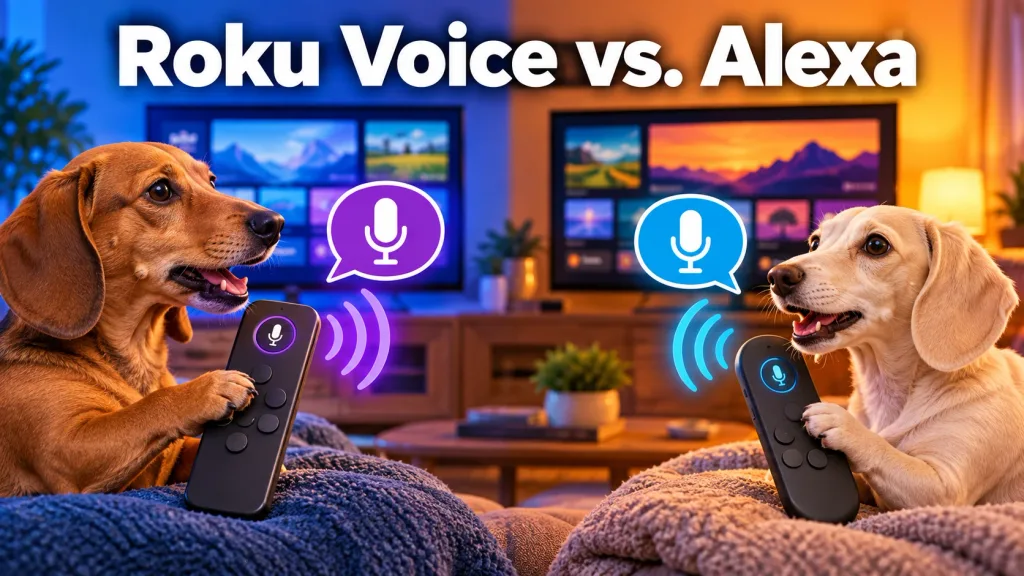
Voice control is one area where Fire TV has a clear advantage.
Roku Voice is useful for the things I would expect from a streaming device. You can search for movies and shows, launch apps, and control basic playback without having to type everything with the remote.
Amazon takes voice control quite a bit further with Alexa.
On compatible Fire TV devices, Alexa can search for entertainment, launch apps, control playback, answer questions, and interact with compatible smart-home devices. If you already use Alexa throughout your home, Fire TV fits naturally into that ecosystem.
The Fire TV Cube takes this a step further by offering hands-free Alexa control, so many commands can be given without picking up the remote.
For someone like me who mainly wants a voice remote to help find something to watch, Roku Voice does the job.
But if voice control is an important part of how you use technology throughout your home, Fire TV simply offers more.
Winner: Fire TV
Smart-Home Integration
Fire TV also has the advantage if you want your television to be part of a larger smart-home setup.
With compatible equipment, Alexa can work with smart lights, cameras, plugs, thermostats, and other connected devices. You may even be able to view compatible security cameras directly on your TV.
Roku offers smart-home compatibility as well, but these features are not as central to the Roku experience.
Winner: Fire TV
Private Listening and Bluetooth
Private listening is one of those features that becomes much more useful once you actually need it.
Roku makes this especially easy. Depending on the device and setup, you can listen through compatible Bluetooth headphones or use the Roku mobile app with headphones connected to your phone.
That is handy if someone else is sleeping, you watch TV late at night, or you simply prefer hearing dialogue through headphones.
Fire TV also supports Bluetooth audio on compatible devices, so wireless headphones and earbuds can be paired directly.
Both platforms handle this well, but I give Roku a slight edge because private listening feels especially well integrated into the Roku experience.
Winner: Roku, by a small margin
Free Movies, TV Shows and Live Channels
Free streaming has become more important as the cost of paid streaming services continues to add up.
Roku has a strong advantage here because The Roku Channel is built directly into the platform and offers a large mix of free ad-supported movies, TV shows, live channels, news, sports, and Roku Originals.
Fire TV also gives you access to plenty of free streaming apps and ad-supported services, so you do not need a paid Prime Video subscription just to get value from the device. If you want to explore more no-cost options, my Free Streaming Services: What They Are & How to Use Them guide covers several ways to watch without adding another monthly bill.
The difference is that Roku makes free content feel like a bigger part of the overall platform.
For cord-cutters trying to keep monthly costs down, that can be a real benefit.
Winner: Roku
Roku vs. Fire TV for Gaming
Gaming is not the main reason to buy either Roku or Fire TV, but there is a difference between the two.
Roku is primarily built around streaming movies, TV shows, live channels, and apps. Gaming is not one of its major strengths.
Fire TV offers more possibilities, especially on compatible higher-end devices that support cloud gaming services and Bluetooth game controllers.
That still does not make Fire TV a replacement for a PlayStation, Xbox, or gaming PC. But if you want a streaming device that can also handle some casual or cloud gaming, Fire TV gives you more flexibility.
If gaming does not matter to you, this category probably should not influence your buying decision very much.
Winner: Fire TV
Roku Pros and Cons
Roku’s biggest strength is that it keeps streaming simple. That has been a major reason I have continued using Roku devices over the years.
Pros
- Very easy to set up and use
- Simple, app-focused interface
- Excellent choice for beginners
- Wide range of devices and price points
- Strong 4K and HDR support on compatible models
- Excellent free content through The Roku Channel
- Good private-listening options
- Works well for people who do not want to commit heavily to one ecosystem
Cons
- Voice control is not as powerful as Alexa
- Smart-home integration is not as deep as Fire TV
- Roku has added more recommendations and promotional content over time
- Gaming is not one of its strengths
For viewers who mainly want an easy way to reach their streaming apps, Roku’s advantages outweigh its drawbacks.
Fire TV Pros and Cons
Fire TV’s biggest strengths are its Alexa integration, smart-home features, and close connection to Amazon’s ecosystem.
Pros
- Excellent Alexa voice control
- Strong smart-home integration
- Wide range of devices and price points
- Powerful premium options such as the Fire TV Cube
- Strong 4K, HDR, and audio support on compatible models
- Good content-discovery features
- Better gaming potential than Roku
Cons
- Interface can feel busier than Roku
- Amazon content and recommendations may be more prominent
- May appeal less to viewers who want a simple, app-first experience
- Some of its biggest advantages matter most if you already use Alexa or Amazon services
Fire TV makes the most sense for people who want deeper Alexa, smart-home, and content-discovery features.
Which Is Better for Beginners?
For beginners, I would choose Roku. If you are still learning how these devices work, my What Is a Streaming Device? A Beginner’s Guide explains the basics.
The biggest reason is simplicity. Roku is easy to set up, the Home Screen is straightforward, and you do not have to sort through as many recommendations and features just to get to your apps.
That can make a big difference for someone who is new to streaming or moving away from cable or satellite TV. If you are just getting started, my Streaming Basics for New Users guide can help explain the basics before you choose a device.
My own experience with Roku has always been that it gets out of the way and lets me watch what I want without much fuss.
Fire TV is still easy enough to use, but its heavier emphasis on recommendations, Alexa, and Amazon services can make it feel a little busier.
If you want the easiest starting point, Roku gets my vote.
Winner: Roku
Which Is Better for Seniors?
For seniors who value a straightforward streaming experience, I would lean toward Roku.
Its simple Home Screen and easy app navigation can make the transition from cable or satellite TV feel less complicated.
Fire TV can still be a good choice, especially for someone who already uses Alexa and Amazon services.
But if ease of navigation is the priority, Roku would be my recommendation.
Winner: Roku
Which Is Better for Alexa Users?
If Alexa is already a regular part of your household, Fire TV is the easy choice.
Its deeper Alexa integration makes it a natural fit with Echo speakers and other Alexa-compatible smart-home devices.
Roku offers voice features, but Fire TV is clearly stronger for households already invested in Alexa.
Winner: Fire TV
Which Is Better for Families?
This one is much closer because both platforms offer useful advantages for families.
Fire TV can be appealing for families that want more personalized recommendations and deeper integration with Amazon services. Its profile system can also help different household members keep their viewing preferences more organized.
Roku, on the other hand, may be easier for a household that wants one simple interface that everyone can understand without much explanation.
If your family already uses Alexa and Amazon services heavily, I would lean toward Fire TV.
If simplicity matters more than personalization, Roku may be the better fit.
Winner: Tie — it depends on the household
Roku vs. Fire TV: Which Should You Buy?
At this point, the choice really comes down to what matters most to you. If you want help comparing more than just Roku and Fire TV, my How to Choose a Streaming Device in 2026: Buying Guide for Every Budget covers the other factors worth considering.
Buy Roku if you want:
- A simple, easy-to-learn interface
- Quick access to your streaming apps
- Strong free-content options
- Good private listening features
- A platform that feels less tied to one ecosystem
- A beginner-friendly experience
Buy Fire TV if you want:
- Deeper Alexa integration
- Stronger smart-home features
- More personalized content discovery
- Better gaming potential
- Tight integration with Amazon services
- A more connected entertainment and smart-home experience
For viewers who value simplicity and easy navigation, I would lean toward Roku.
If Alexa and Amazon’s ecosystem are already a big part of your home, Fire TV may be the better fit.
The best choice is the one that matches how you actually watch TV.
If neither Roku nor Fire TV feels quite right, the Google TV Streamer 4K is another option worth considering. The Apple TV 4K is another strong alternative if you prefer Apple’s ecosystem and want a more premium streaming device.
Want to see how those two alternatives compare? My Google TV Streamer 4K vs. Apple TV 4K (2026): Which Is Better? comparison breaks down their differences.
Final Thoughts: Is Roku or Fire TV Better in 2026?
For my own TV, I would still choose Roku.
I have used Roku devices for years, beginning with a Roku Premiere and later moving on to Roku Ultras and a Roku Streaming Stick. What has kept me with Roku is not one flashy feature. It is the fact that Roku has consistently been simple, dependable, and easy to use.
That matters to me.
I want to turn on the TV, choose a streaming service, and start watching without spending much time navigating menus or sorting through recommendations.
That said, Fire TV has some real strengths. Its Alexa integration, smart-home capabilities, content discovery, and gaming options make it a very good fit for households already invested in Amazon’s ecosystem.
So my overall decision is pretty simple:
👉 Choose Roku if you value simplicity, easy navigation, and a straightforward streaming experience.
👉 Choose Fire TV if Alexa, smart-home integration, and Amazon’s ecosystem matter more to you.
For the average cord-cutter, I still give Roku the overall edge.
But the best streaming device is ultimately the one that fits the way you want to watch TV.
👉 Which do you prefer—Roku or Fire TV? Let me know in the comments.
👉 And if you are still comparing streaming devices, check out my other Roku, Fire TV, and streaming-device reviews here on bethmark.com.
And as always:
I will watch what I want to watch, when I want to watch it.
Thanks for visiting,
Mark